
The Great Wildebeest Migration – Tanzania Safari
The Secrets of the Great Wildebeest Migration – Africa’s Wildest Show on Earth
The Great Wildebeest Migration is one of the most awe-inspiring natural spectacles on the planet. Every year, over 1.5 million wildebeests — joined by hundreds of thousands of zebras and gazelles — make a massive circular journey across the Serengeti National Park in Tanzania and the Maasai Mara in Kenya.
This isn’t just an animal movement; it’s a dramatic cycle of life and death, survival and instinct, which play out in the vast African savannah.
The Journey of a Lifetime

Covering more than 1,800 miles annually, the migration is the largest terrestrial animal movement in the world.
The wildebeests are not simply wandering — they are following the rains and searching for fresh grazing lands.
This movement ensures that the grasslands of the Serengeti and Maasai Mara remain healthy and balanced, benefiting countless other species.
Migration Route Highlights:
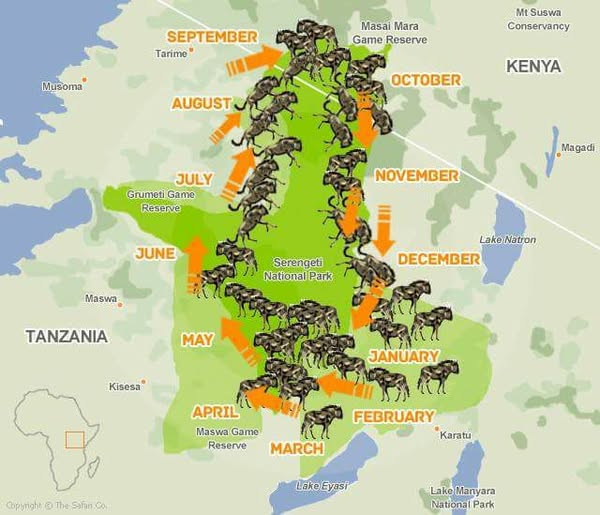
January to March – Calving season in the southern Serengeti and Ndutu plains.
April to June – Herds move northwest towards the Grumeti River.
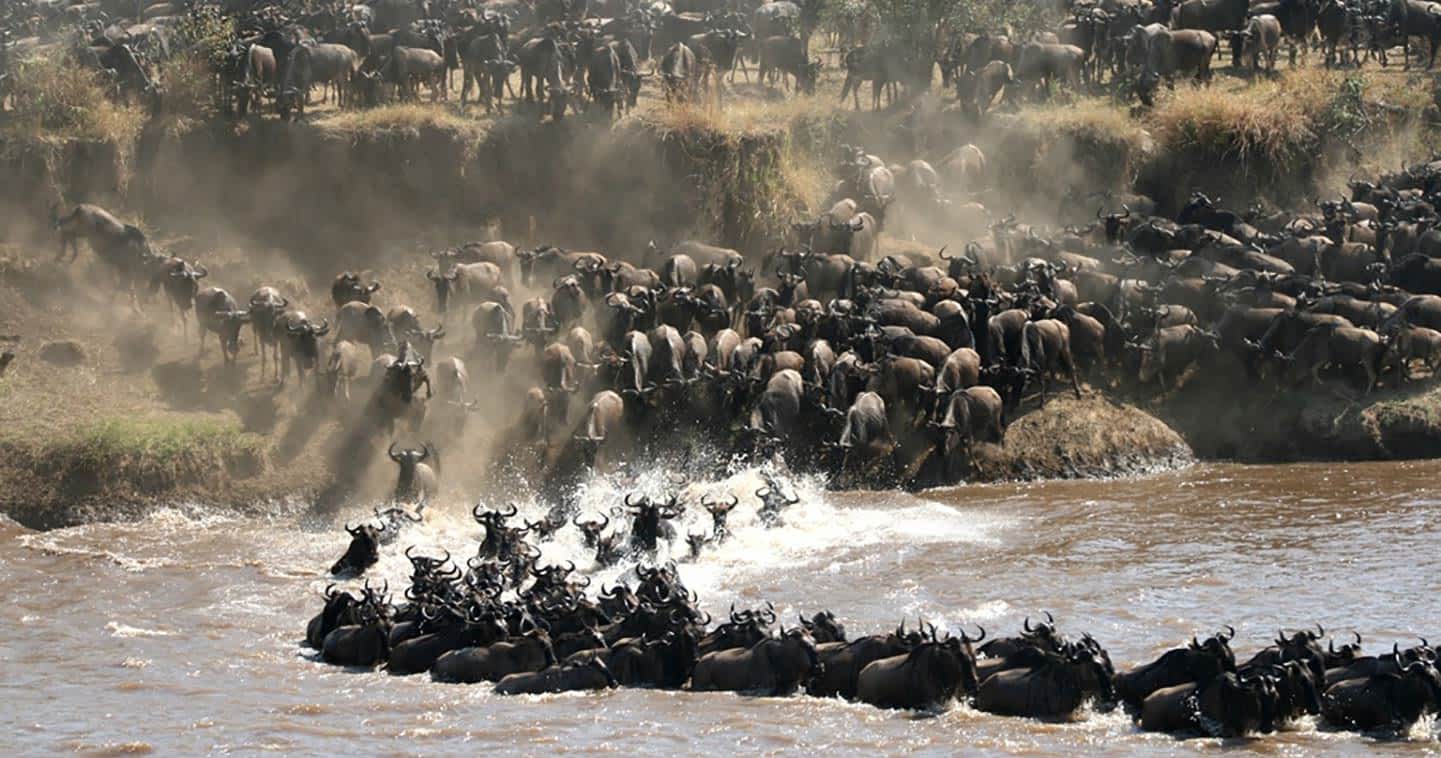
July to September – The famous Mara River crossings, a heart-stopping spectacle of courage and tragedy.
October to December – Return journey to the south as rains replenish the plains.
The Drama of the Calving Season
One of the migration’s best-kept secrets is the synchronized birthing that happens between January and March. In just a few weeks, almost 500,000 calves will be born.
This is nature’s strategy to overwhelm predators — there’s simply too much prey for lions, cheetahs, and hyenas to catch.
Fun Fact: A newborn wildebeest can stand and run within minutes of birth — an essential skill in a land where predators are never far away.
The Dangerous River Crossings
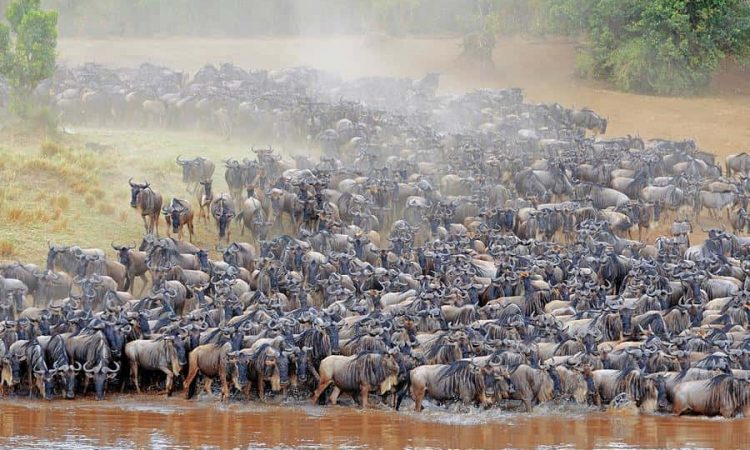
Perhaps the most photographed and talked-about part of the migration is the Mara River crossing. This is the ultimate test of survival.
Wildebeests gather nervously at the riverbanks, aware of the Nile crocodiles lurking below. When the first brave wildebeest leaps in, a chain reaction begins, a chaotic rush of bodies, splashes,
and desperate swimming. Not all make it. Some are swept away by strong currents; others fall victim to crocodiles.
Interesting Detail: Wildebeests are surprisingly good swimmers, but their panic during crossings can cause deadly stampedes.
The Wildebeest – Nature’s Marathon Runner
Wildebeests may look odd with their boxy heads and skinny legs, but they are built for endurance. They can run up to 80 km/h (50 mph) and maintain a steady pace for hours.
This stamina is vital for keeping ahead of predators and traveling long distances.
Little-Known Fact: The name wildebeest comes from Afrikaans, meaning “wild beast,” but locals also call them gnu (pronounced “new”), which comes from the khoikhoi or nama languages of Southern Africa and mimics the sound they make.
The Zebras’ Role in the Migration
It’s not just wildebeests making the trip; zebras are important migration partners. Zebras graze on tougher grasses, leaving behind softer shoots for wildebeests to feed on.
This teamwork ensures better survival for both species.
Fun Fact: Zebras have an incredible memory for routes and waterholes, helping guide the herds.

The Legends and Myths of the Migration
Among the Maasai people, there is a legend that the wildebeest was made from spare parts left over after all the other animals were created — the horns of a buffalo,
the body of an antelope, the mane of a horse, and the beard of a goat. Another Maasai belief says the migration follows the footsteps of ancient spirits who walked the land in search of eternal grasslands.
Why the Great Migration Matters
Ecological Balance: Grazing patterns fertilize the soil, keep grasses in check, and support countless species.
Tourism Impact: The migration draws thousands of travelers to Tanzania and Kenya each year, boosting conservation efforts and local economies.
Predator Survival: Lions, cheetahs, hyenas, crocodiles, and vultures rely heavily on the migration for food.
Tanzania Safari Accommodation Options for Visitors
To fully enjoy the Great Wildebeest Migration, choosing the right accommodation is essential. Options range from luxury lodges to tented safari camps,
all designed to immerse visitors in the wildlife experience while providing comfort and safety.
Top Recommended Options:
Kitela Lodge (Tanzania): Offering luxury tents with private decks overlooking the plains, ideal for sunrise and sunset views of migrating herds.
Ndutu Safari Lodge: Close to the calving grounds, perfect for witnessing predator-prey interactions and young wildebeest calves.
Mara Serena Safari Lodge (Kenya): Located in the Maasai Mara, with panoramic views of the Mara River crossings and direct access to guided safari drives.
Luxury Mobile Safari Camps: Flexible accommodation that moves with the herds for up-close migration experiences.
Tip for Visitors: Book accommodations well in advance, especially during peak migration months (July–September), to secure the best locations with panoramic views and professional safari guides.
Tips for Experiencing the Migration on Safari
If you’re planning an African safari to see the wildebeest migration, timing is everything:
January–March: Ndutu plains — calving and predator action.
June–July: Grumeti River crossings.
July–September: Mara River crossings — the migration’s most famous stage.
October–December: Herds return south, perfect for quieter, less-crowded safaris.
Fascinating Facts You Might Not Know!
Wildebeests can detect rain from up to 50 km away. The migration is so vast that it can be seen from space.
More than 250,000 wildebeests die each year from drowning, predation, exhaustion, or injury — yet the population remains stable.
The herds move in a clockwise pattern, returning to almost the same spots each year.
Wildebeests have excellent hearing and smell but relatively poor eyesight, relying on zebras to spot predators.
Great Wildebeest Migration Map
Witnessing a Living Wonder
The Great Wildebeest Migration is more than an African safari attraction; it’s a timeless natural phenomenon that connects the past, present, and future of the savannah.
To stand on the Serengeti plains and watch a living, breathing ocean of animals is to witness one of the last great wild events on Earth — raw, beautiful, and unforgettable.
Contact Our Team for the Great Wildebeest Migration experience.